

How to Choose a Beach Umbrella for Wind, Sun and Sand
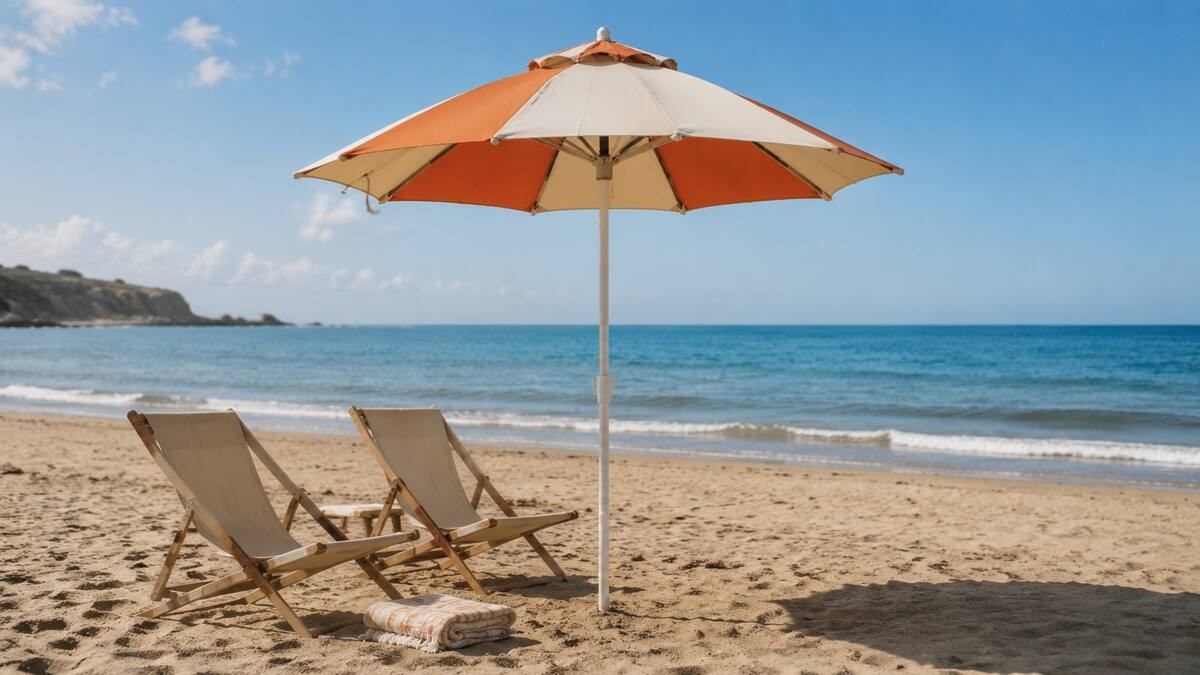
The right beach umbrella combines useful shade with a frame, pole and anchor suited to the intended location.
A beach umbrella has a simple job: create a useful patch of shade in a place where sun, salt, sand and moving air all work against the product. For anyone asking how to choose a beach umbrella, the canopy, ribs, runner, tilt joint, upper and lower pole, fasteners, carry bag and anchor. Each component changes how the product feels in daily use. For retailers and private-label buyers, the same details also determine carton size, warranty exposure, replacement-part needs and the accuracy of marketing claims.
Start With the Use Case, Not the Product Photo
Before comparing fabrics, define who will carry the umbrella and where it will be installed. A couple walking from a car park needs a different product from a resort rental operator setting up twenty umbrellas every morning. A promotional program may prioritize a clean printable canopy, while a family retail line may value low weight, a tilt joint and an integrated sand anchor.
Traditional center-pole umbrellas are usually the most portable. A pointed or screw-in lower pole suits sand, while a tilt mechanism helps follow the sun without moving the entire umbrella. Large offset or cantilever designs can keep the pole away from the seating area, but they generally need heavier bases and are better treated as installed leisure products than as carry-to-the-beach accessories.
Choose the Canopy Size by the Shade Footprint
Nominal diameter is useful, but it is not the same as the shaded area people receive throughout the day. Canopy height, sun angle, tilt range and chair position all matter. A bigger canopy also creates more surface for the wind to act on, so size must be matched with the frame and anchor rather than considered alone.
|
Planning size |
Typical use |
What the buyer should confirm |
|
6-7 ft / 1.8-2.1 m |
One or two users, compact retail and easy transport |
Folded length, carry weight, chair placement and usable tilt range |
|
7-8 ft / 2.1-2.4 m |
Small families, mainstream beach retail and branded programs |
Frame strength, pole diameter, vent design and anchor compatibility |
|
Above 8 ft / 2.4 m |
Groups, resorts, rentals and wider promotional display |
Total system weight, setup labor, anchoring instructions and wind-use limits |
These ranges are planning guides, not performance promises. A responsible specification records both canopy span and finished product dimensions, then pairs them with the target user, anchor type and packed size.
Read the Fabric Specification Beyond the Fiber Name
Polyester is common because it balances cost, printing flexibility and drying speed. Olefin and solution-dyed acrylic can be useful where long outdoor exposure and color retention matter, but fiber name alone does not establish UV protection or service life. Fabric weight, weave density, color, coating, seam construction and weathering all influence the result.
Wind Resistance Depends on the Entire System
A vent can allow some air to pass through the canopy, and flexible ribs may recover better than brittle components after a brief load. Neither feature makes an umbrella windproof. The canopy area, rib material, hub, pole joints, lower pole and anchor all work together, and the user's setup has just as much influence as the component list.
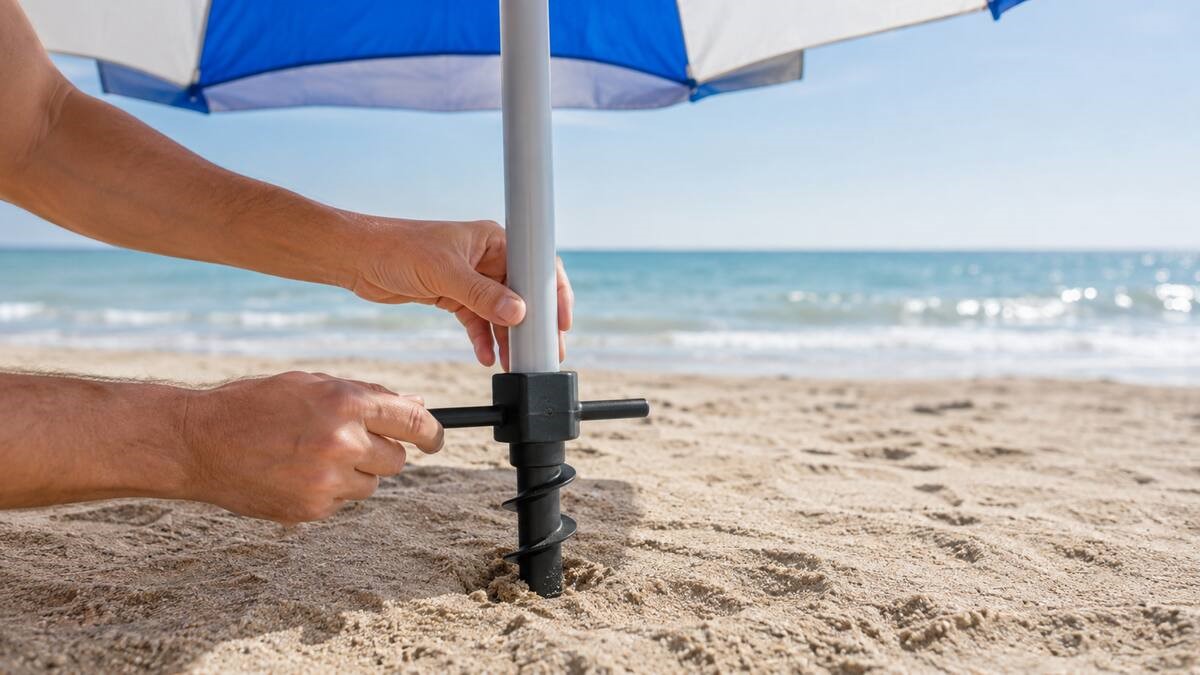
A screw-in anchor can simplify setup, but secure installation still depends on the sand, depth, pole fit and changing wind.
Compare anchoring methods
A pointed pole is simple and light, but loose sand may provide limited resistance. A spiral or auger-style anchor creates a larger holding surface and can be easier to install with a turning handle. Separate sand bags add ballast but increase setup time.
Portability Is a Product Specification
Portable should mean more than "includes a bag." Record the complete carry weight, folded length, bag dimensions, handle construction and whether sharp or abrasive parts are isolated from the fabric. A product that is easy to open but awkward to repack will not feel convenient after repeated use.
For rental and resort programs, setup speed and replaceable components may matter more than minimum weight. For e-commerce, the packed length and carton protection can affect shipping cost and damage rates.
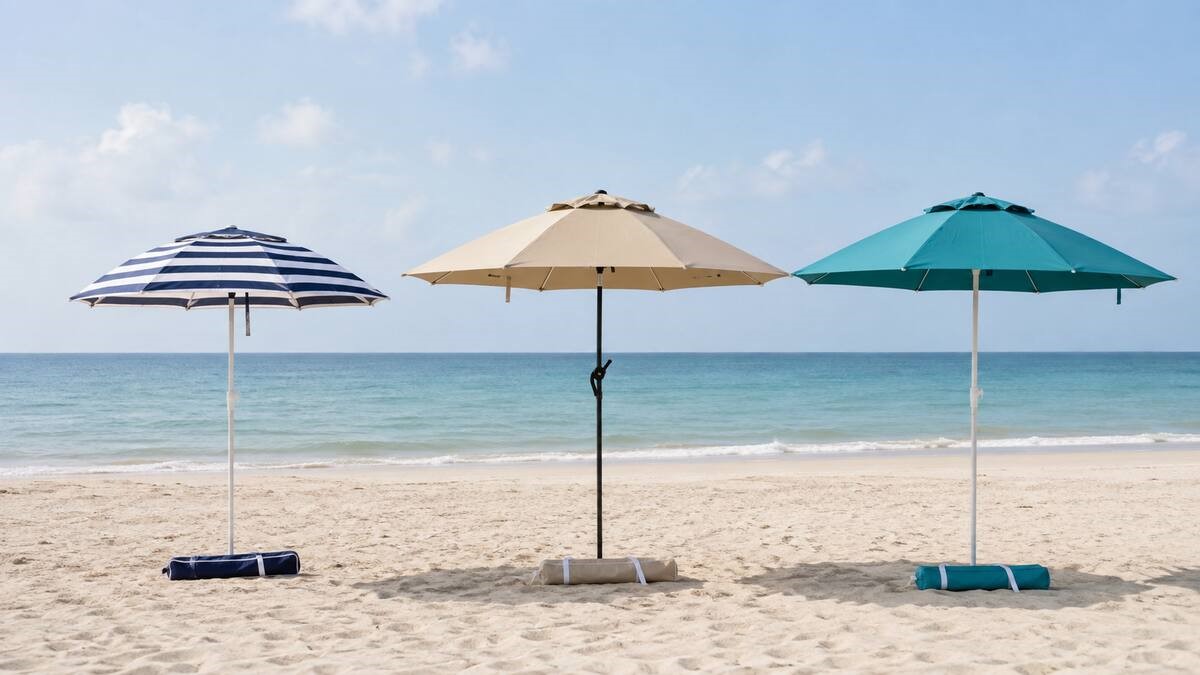
Canopy diameter, frame construction and packed size should be compared together rather than as separate selling points.
What Should Wholesale Buyers Put in the RFQ?
A clear request for quotation reduces guesswork and makes supplier comparisons more useful. Importers, retailers, resorts and promotional companies should provide the intended market and use case before asking for a price.
· Canopy diameter, shape, panel count, height and required tilt function.
· Fabric composition, weight, coating, color standard
· Rib quantity and material, pole diameter, wall thickness, finish and joint design.
· Vent construction, lower-pole design, anchor type and required warning labels.
· Target product weight, folded length, carry bag and retail packaging.
· Logo size, print method, artwork position, color tolerance and pre-production approval.
· Order quantity, destination market, barcode, manual language and test requirements.
Custom Beach Umbrellas for Retail and Resort Programs
VESTA's vented beach umbrella with sand anchor combines a 6.5-foot canopy, tilt adjustment and an integrated screw-in anchor for portable beach use. Custom colors, printed artwork, labels, carry bags and retail cartons can be developed for private-label programs.
Buyers comparing additional sizes and canopy styles can review the VESTA beach umbrella category. Send the target size, fabric, quantity, destination market, artwork and required testing information so the frame, anchor and packaging can be matched to the project.
Conclusion
Learning how to choose a beach umbrella means looking beyond a bright canopy and a large diameter. The most reliable choice matches the shade footprint, fabric evidence, frame, pole, anchor, packed size and instructions to a defined user and location.