

Wholesale Fishing Umbrella Buying Guide: 8 Specs to Check
For anglers, an umbrella is more than a cover for occasional rain. It creates a working area where a chair, bait, tackle and small accessories can remain usable through changing weather. For an importer or retailer, however, the important question is not simply whether the canopy opens. The product must fit the fishing style, local climate, expected retail price and transport method.
This fishing umbrella buying guide turns those practical needs into a clear sourcing checklist. It explains how to compare product formats and which specifications should appear on a quotation, sample approval sheet and purchase order. The aim is to help buyers select a wholesale fishing umbrella that performs consistently and can be described honestly to end users.
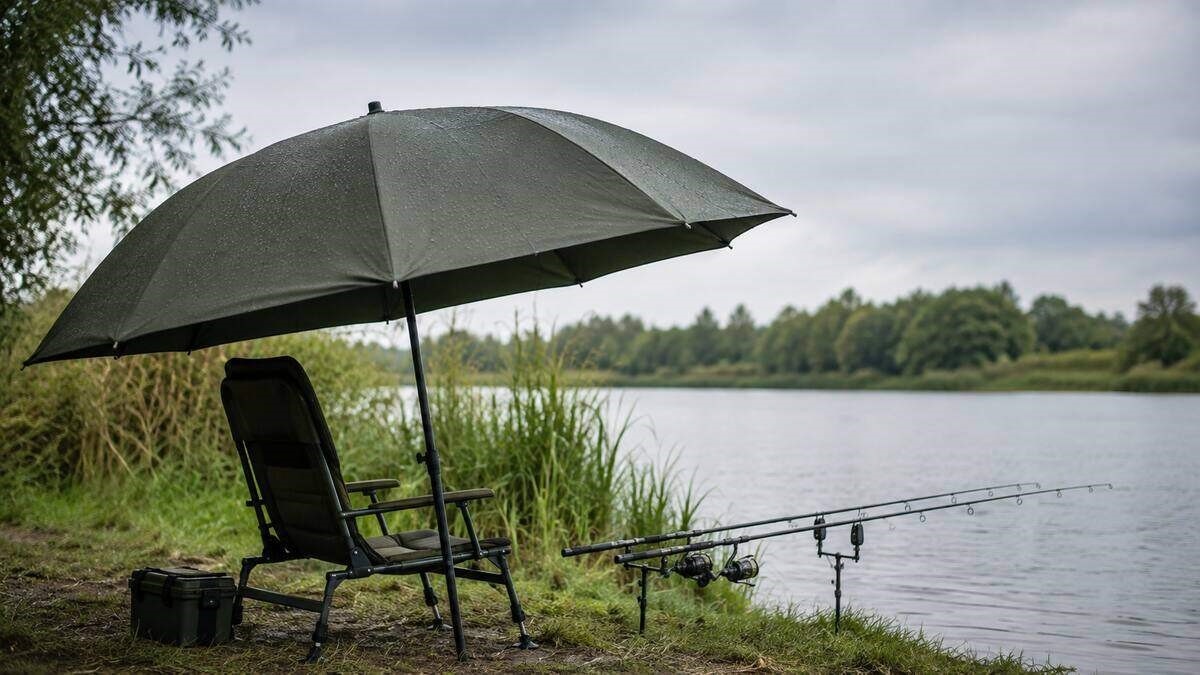
A fishing umbrella should create a practical working area without blocking access to rods, tackle or the water.
Start with the fishing scenario, not the umbrella diameter
Two canopies with the same stated diameter may serve very different customers. A match angler seated beside a compact tackle station may value fast angle adjustment. A carp angler on a longer session may prefer side panels and pegging points. A retailer selling to casual anglers may need a lighter model with simpler packaging and a lower target price.
Before asking for a quotation, define the usual session length, bank conditions, expected rain direction, number of people under the canopy and the equipment that must stay covered. This information helps a supplier recommend the right construction instead of sending a price for a visually similar but unsuitable model.
|
Fishing umbrella format |
Best suited to |
Important buying questions |
|
Adjustable standard brolly |
Short sessions, match fishing, general sun and light-rain cover |
Tilt range, pole adjustment, chair or ground mounting |
|
Umbrella with side walls |
Longer sessions and greater protection from diagonal rain |
Wall attachment, pegging points, entrance width, packed weight |
|
Compact bait umbrella |
Protecting bait trays, buckets or rig-making areas |
Tray compatibility, clamp size, usable working clearance |
Eight specifications wholesale buyers should confirm
1. Usable coverage and measurement method
Do not rely on one large size number. Some sellers quote canopy diameter, some quote arc measurement over the dome, and others quote rib length. Ask for a simple dimension drawing that shows open width, canopy depth, centre height, pole length and packed length. This prevents comparison errors between suppliers.
Coverage should also be checked with the chair and tackle arrangement used by the target customer. A wide canopy can still feel cramped if the central hub hangs low or if the pole occupies the main working area. For samples, photograph the umbrella next to a standard fishing chair and measure the clear headroom.
2. Canopy fabric, coating and seam construction
Fabric weight and denier describe different properties and neither number alone proves rain performance. Buyers should request the fibre type, fabric construction, nominal weight or denier, coating type and seam treatment. PU-coated polyester is common, while taped or sealed seams may reduce leakage through needle holes.
If a supplier states a hydrostatic-head value, ask for the test method, report date and tested material code. ISO 811:2018 describes a hydrostatic-pressure method for measuring resistance to water penetration. A result from one fabric should not automatically be applied to a different colour, coating or production lot.
3. Frame material and real reinforcement points
The frame should balance strength, flexibility, weight and cost. Fibreglass ribs can flex and resist corrosion, while steel may offer rigidity at a higher weight. Aluminium poles reduce carrying weight but still need adequate wall thickness and reliable locking parts. Ask for material details for the ribs, stretchers, pole and central hub separately.
Inspect the places where failures usually begin: rib tips, stretcher joints, hub connections, tilt gears and the pole lock. A general phrase such as “reinforced frame” is not enough for a purchase order. Buyers should define component dimensions, acceptable movement at joints and a sample test that matches normal opening, closing and adjustment.
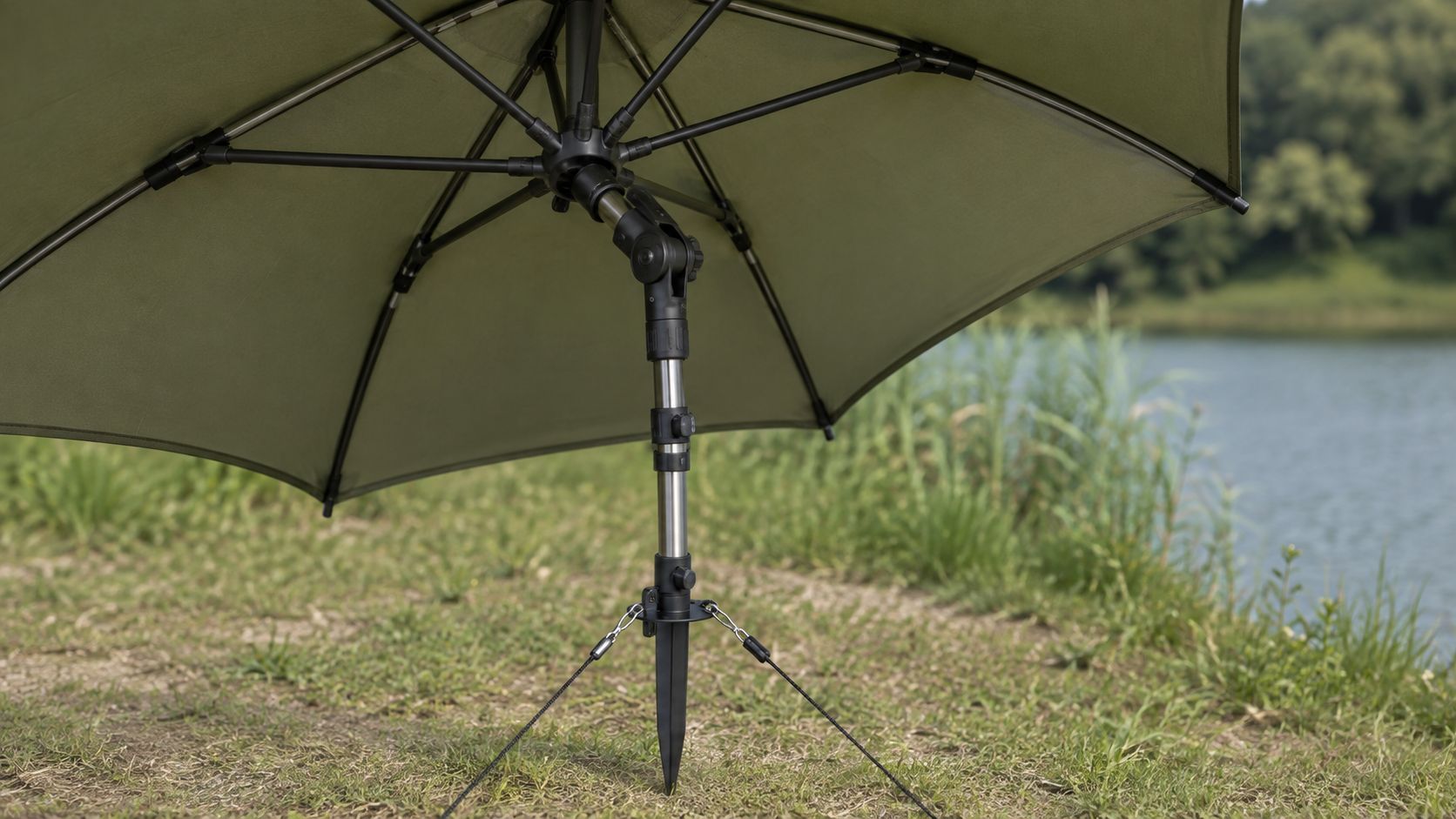
Frame joints, tilt hardware and anchoring components deserve more attention than a general “strong frame” claim.
4. Tilt, rotation and pole adjustment
Rain and low-angle sunlight rarely arrive directly from above. An adjustable joint helps the user reposition the canopy, but the mechanism must remain secure after repeated use. Confirm the tilt range, rotation method, locking design and whether adjustment can be made while the umbrella is installed.
For a wholesale fishing umbrella program, usability matters as much as the maximum angle. A simple mechanism may be better for entry-level retail, while a gear or universal joint can support a higher-value model. During sample testing, check for pinched fingers, sharp edges, sudden collapse and slippage under moderate manual load.
5. Ground fixing, clamps and wind management
A ground spike works on soft soil but may be ineffective on hard, rocky or paved banks. Seat-box arms and chair clamps provide another option, provided the tube diameter and locking method match the customer's equipment. Side-wall models may also need guy lines and pegging points to keep the fabric controlled.
No fishing umbrella should be promoted as safe in every wind condition. Stability depends on canopy angle, exposed area, soil, anchoring, assembly and local gusts. The instruction sheet should tell users to secure the product correctly, lower or close it when conditions worsen, and never leave it erected unattended.
6. Side walls, ventilation and access
Detachable side walls can improve protection from diagonal rain and provide a more sheltered work zone. They also add weight, packed volume and setup steps. Confirm whether the panels attach with zippers, hook-and-loop strips or clips, and whether each panel can be replaced separately after damage.
Ventilation and access are especially important when several sides are closed. Check the entrance width, airflow openings and visibility from the seated position. A side wall should not prevent the angler from watching rods or leaving the shelter quickly. The product should be used as an open fishing shelter, not as a sealed living space.
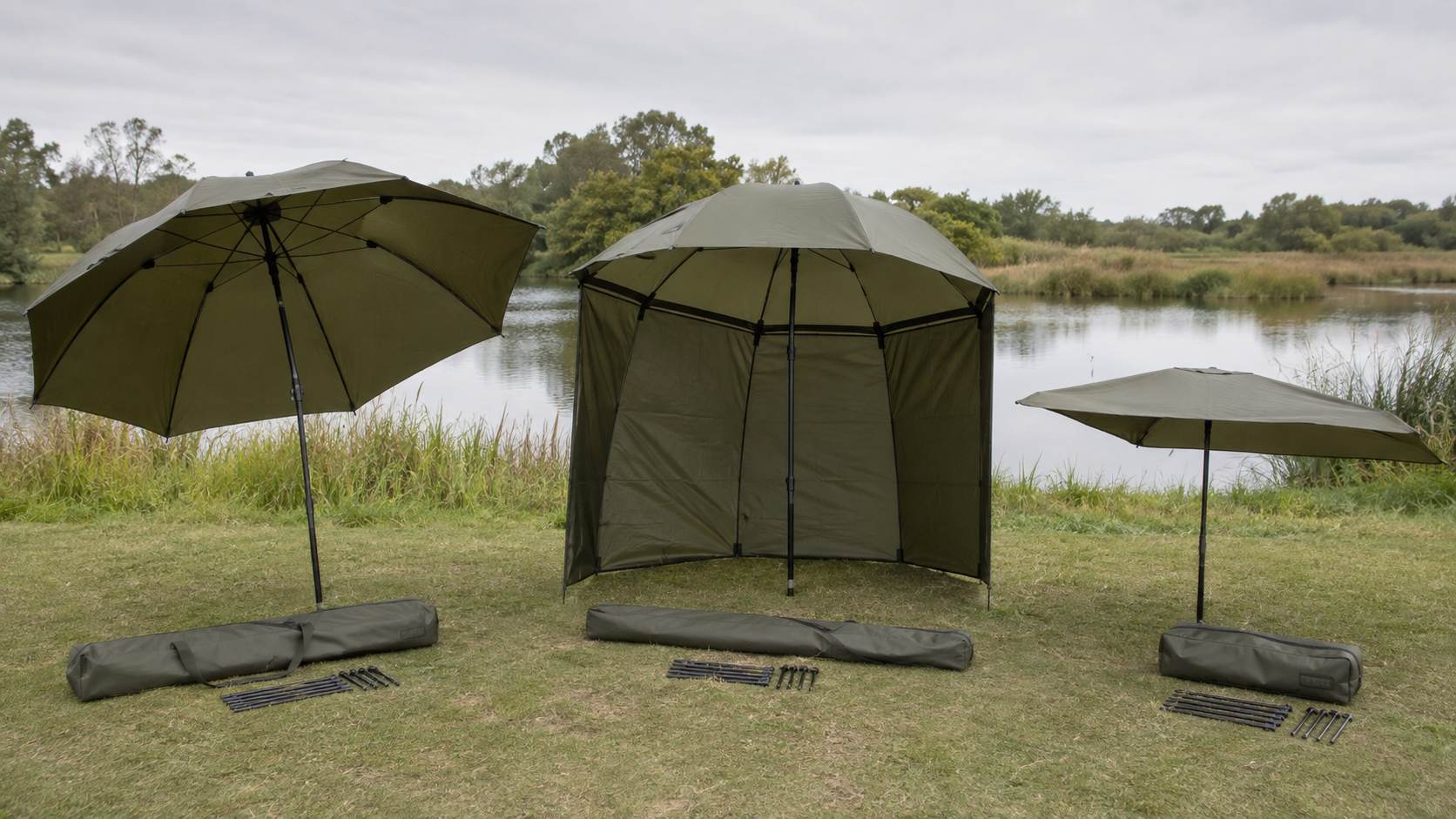
Product format should follow the customer's session type: fast adjustable cover, greater side protection or compact bait protection.
7. Sun-protection claims and colour choice
Dark green, khaki and camouflage colours are familiar in carp and coarse-fishing markets, while brighter colours may suit clubs, events or coastal use. Colour is primarily a merchandising and visibility decision. It should not be used as proof of ultraviolet protection.
If UPF is part of the sales claim, request a report that identifies the actual canopy material and test condition. AATCC TM183 is a method for determining ultraviolet radiation blocked or transmitted by textile fabrics. Buyers should use the rating shown in valid evidence rather than estimating performance from colour or coating appearance.
8. Packaging, spare parts and production control
A suitable wholesale fishing umbrella must survive both use and distribution. Confirm the carry bag material, carton dimensions, units per carton, gross weight, protective packing around joints and any drop-test requirement. Packed length can affect courier fees, warehouse slots and the final landed cost more than buyers expect.
Agree on replaceable parts before production. Useful spares may include tips, tilt joints, clamps, pegs, guy lines, carry bags and detachable panels. The purchase order should also list approved colours, logo position, printing method, warning labels, barcodes, manuals and the inspection standard for the shipment.
A practical sample-approval process
Begin with a written specification sheet and request one wholesale fishing umbrella sample that represents the proposed materials. Measure the sample rather than relying only on a catalogue. Open and close it repeatedly, adjust every joint, install it on relevant surfaces, apply water to the canopy and seams, and inspect the packed product after transport.
Next, record any change in a signed approval sheet. A different fabric, coating, rib diameter or joint can change performance even when the product looks the same in photographs. Pre-production samples and shipment inspections should be compared with the approved reference, not with a broad marketing description.
For custom projects, ask the supplier to quote the base model and each option separately. This makes it easier to compare a plain canopy with logo printing, detachable walls, upgraded ribs, retail packaging or spare-parts kits. It also helps the buyer build good-better-best price levels without losing control of the specification.
Questions to include in an RFQ
1. Which open and packed dimensions are guaranteed, and how is canopy size measured?
2. What are the materials and dimensions of the canopy, ribs, stretchers, pole, hub and tilt joint?
3. Which water-resistance or UV reports are available for the exact proposed fabric?
4. Which anchors, clamps, side panels and carry bags are included in the unit price?
5. Which replacement parts can be ordered, and what is their minimum quantity?
6. What are the sample cost, production lead time, MOQ, carton data and inspection terms?
Conclusion: buy the specification, not the photograph
The best product is not always the largest or heaviest option. It is the model whose coverage, adjustment, anchoring, fabric and packaging match the intended fishing market. A clearly defined specification also gives the supplier a stable target and gives the buyer objective criteria for approving production.
When evaluating a wholesale fishing umbrella, compare real dimensions, material evidence, attachment details and after-sales parts before comparing price. This approach reduces surprises and supports more accurate product listings, retail training and customer expectations.
VESTA Outdoor supplies adjustable fishing umbrellas and related outdoor shelter products for custom and bulk projects. Buyers can view the fishing umbrella category, review an adjustable tilt model, or send an enquiry with target size, quantity, market and packaging requirements.
Frequently Asked Questions
What size fishing umbrella is suitable for wholesale retail?
There is no universal size. The buyer should define open width, arc measurement, pole height, usable headroom and packed length. The correct choice depends on whether the umbrella protects one seated angler, a larger tackle station or a longer-session shelter area.
Does a higher-denier fabric guarantee better waterproofing?
No. Denier describes yarn linear density, not complete rain performance. Fabric construction, coating, seam treatment and the finished canopy all matter. Request a relevant water-resistance test and confirm that the report matches the proposed material.
Is a fishing umbrella windproof?
No supplier should promise safe use in all wind. Stability changes with canopy angle, anchoring, ground conditions, assembly and gust speed. Instructions should require correct fixing and advise users to lower or close the umbrella when conditions become unsuitable.
Can fishing umbrellas be customized for a brand?
Common options include canopy colour, logo printing, carry-bag branding, labels, manuals, cartons, side walls and accessory kits. Buyers should approve artwork placement and a physical sample before bulk production.