

Motorcycle Umbrella Canopy vs Rain Suit: Which Works Better?
Industry News | August 4, 2026 | Vesta-outdoor
Rain protection for a motorcycle is rarely a one-product decision. A short, stop-and-go city route and a long ride on an open road may both happen in wet weather, but they place very different demands on the rider and the equipment. That is why the useful question is not simply, “Which product is better?” It is, “Which solution matches the route, weather and vehicle?”
A motorcycle umbrella canopy can provide convenient overhead cover for daily urban use, while a rain suit gives the rider closer, body-worn protection from wind-driven rain and road spray. Each has clear advantages, and neither should be treated as a replacement for a helmet, eye protection or careful riding decisions.
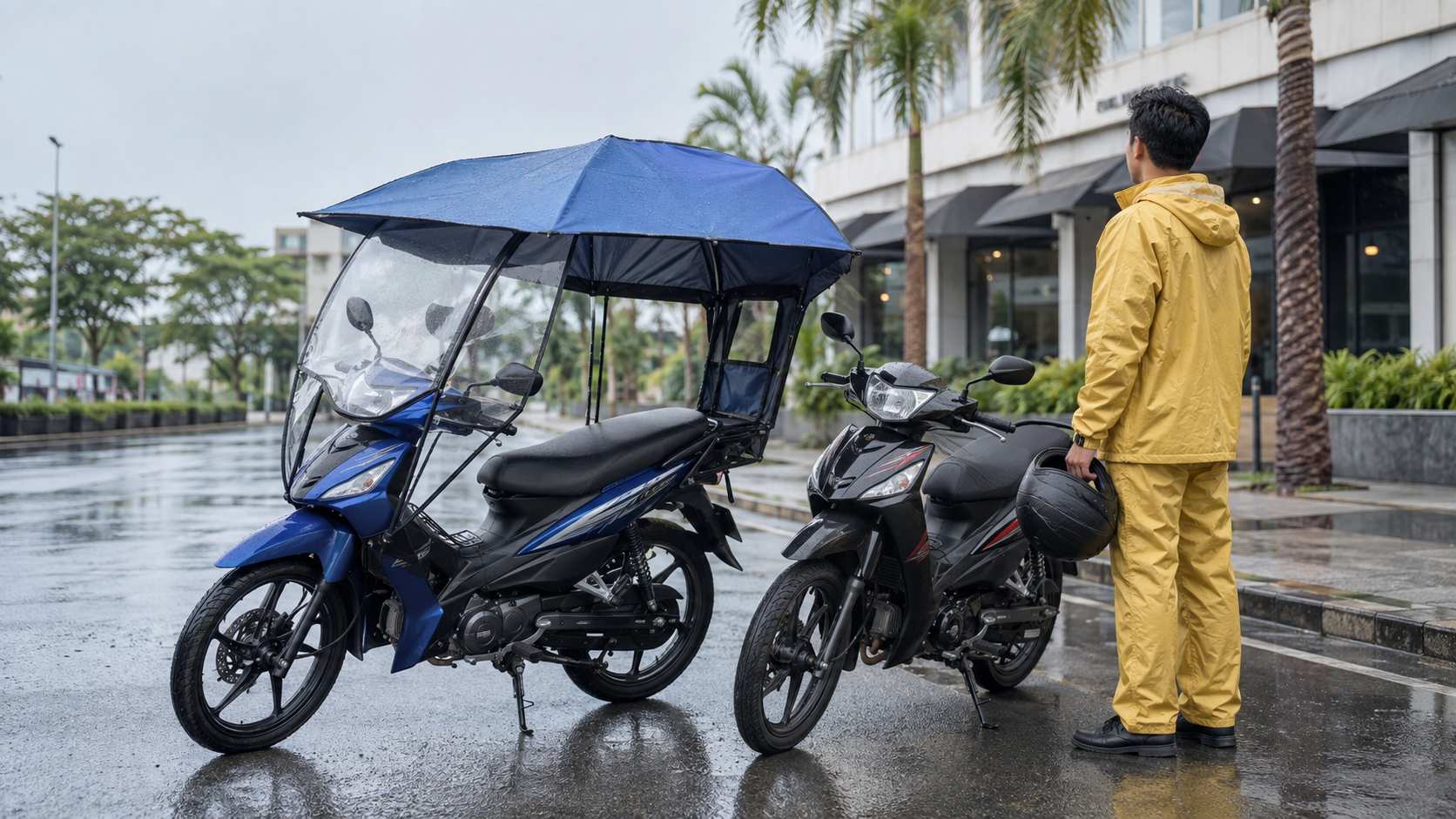
A canopy and a rain suit solve different wet-weather problems. The right choice depends on route, rain direction, wind and rider routine.
What Does Each Option Actually Protect?
A motorcycle canopy is mounted to the vehicle rather than worn by the rider. Its main job is to create a roof above the seating area. Depending on its width and rear extension, it may help shield the rider, part of the passenger seat and the controls from direct rain and strong sunlight.
The open-sided layout is one reason many commuters find it comfortable in hot climates. The rider does not have to add another clothing layer, and the canopy is already in place when a brief shower begins. However, open sides also mean that crosswind, diagonal rain and water thrown up from the road can still reach the rider.
A traditional rain suit works in the opposite way. A waterproof jacket and trousers move with the rider and cover the body more closely. A well-fitted set usually handles side rain and splash better than overhead cover alone, but the rider must stop, unpack it and put it on. In warm, humid weather, a low-breathability suit may also feel uncomfortable during repeated short trips.
Motorcycle Canopy vs Rain Suit: The Practical Differences
|
Buying Factor |
Motorcycle Canopy |
Traditional Rain Suit |
|
Deployment |
Ready once installed; quick-release designs can simplify removal. |
The rider normally stops and changes before continuing. |
|
Coverage |
Best for overhead rain and sunlight; sides remain partly open. |
Covers the rider's body and manages diagonal rain and spray more effectively. |
|
Hot-weather comfort |
Open airflow and no extra clothing layer. |
Comfort depends on fit, ventilation and fabric breathability. |
|
Passenger use |
An extended rear section can improve overhead coverage for a passenger. |
Each person needs correctly sized rainwear. |
|
Wind exposure |
The larger surface area requires careful installation and conservative use. |
A close-fitting suit has less exposed area, but loose fabric should not flap near controls. |
|
Maintenance |
Inspect fabric, ribs, clamps, fasteners and mounting points. |
Dry after use and inspect seams, zippers and reflective details. |
|
Wholesale planning |
Vehicle fit, mount type, spare parts, color and packaging matter. |
Size ranges, material levels and inventory depth create more SKUs. |
When a Motorcycle Umbrella Canopy Makes Sense
A motorcycle umbrella canopy is most attractive where riders make frequent short trips and need cover that is immediately available. Typical examples include urban commuting, local delivery work and passenger transport on routes with repeated stops. It can also add useful shade during the dry season, so the product is not limited to rainy days.
The design matters. A narrow canopy may cover only the rider's upper body, while an extended version can reach farther over the rear seat. A double-layer construction may also create a more substantial barrier between the rider and direct sunlight, although buyers should request test data before making any specific UV or heat-reduction claim.
For retailers and distributors, visible color panels and optional logo printing can make the product easy to differentiate. Yet appearance should come after vehicle compatibility. A successful range starts with the motorcycles and scooters actually used in the target market, followed by suitable mounts, clear installation instructions and replacement hardware.
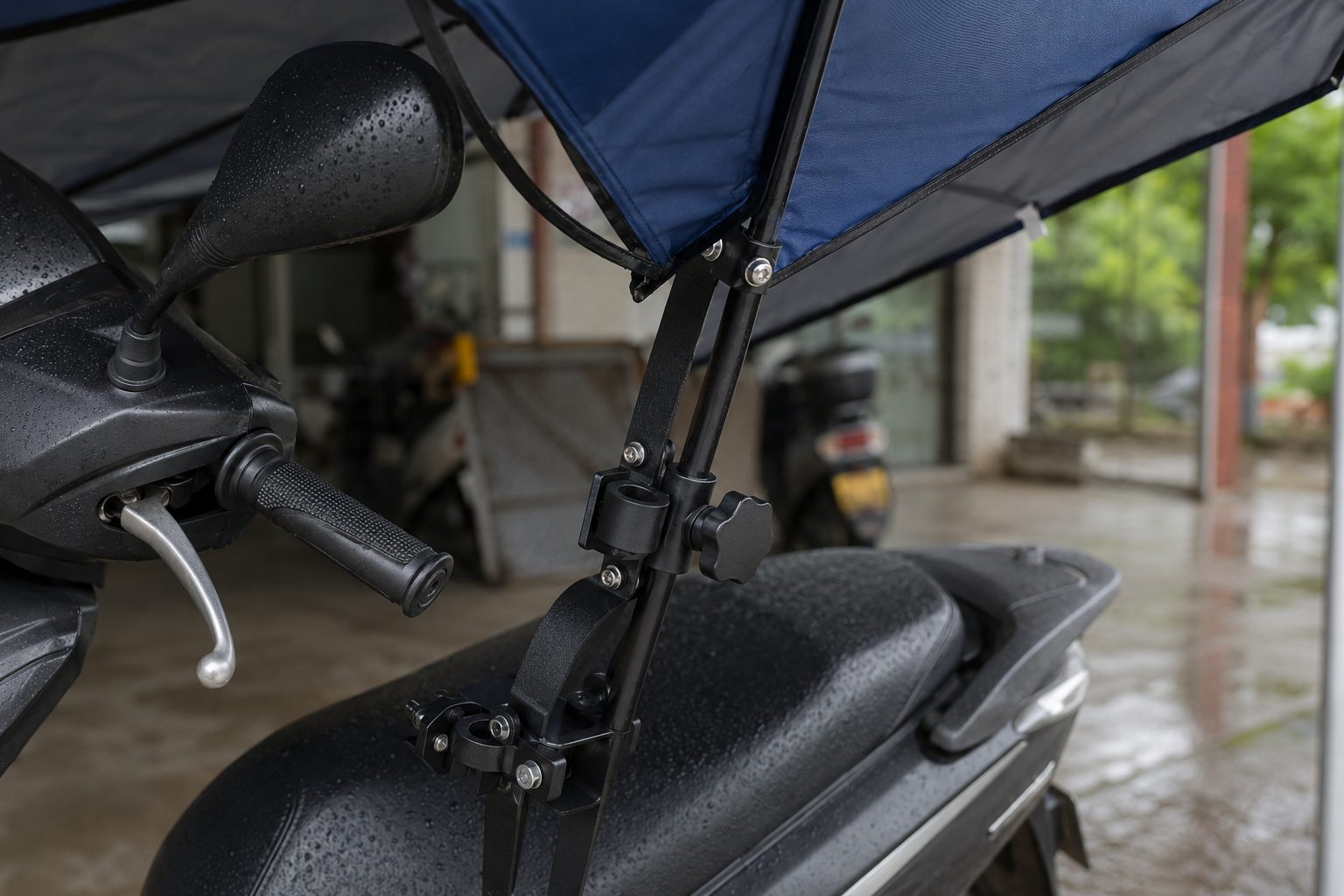
Mounting quality deserves as much attention as canopy fabric. Clamps and fasteners should be checked regularly and must not interfere with controls or sightlines.
When Traditional Rain Gear Is the Better Choice
Rainwear remains the more flexible choice for long-distance travel, open roads and weather that changes quickly. Because it follows the rider's body, it can protect against rain arriving from several directions. Waterproof boots or covers, gloves and a clear face shield may be added according to the route and local safety requirements.
A rain suit is also easy to transfer from one motorcycle to another. That is useful for riders who do not use the same vehicle every day. The trade-off is preparation time. The suit must be accessible, correctly sized and dry enough to store after use. Poor fit can restrict movement or leave loose material close to moving parts.
For sellers, rainwear creates a familiar category but requires thoughtful size planning. Too few sizes lead to poor fit; too many can complicate stock control. Fabric weight, seam construction, ventilation, visibility details and packing size are often more important to repeat customers than a long list of broad “waterproof” claims.
Safety Comes Before Weather Coverage
A vehicle-mounted canopy is an accessory, not protective riding equipment. Before use, the rider should confirm that the installation does not restrict steering, brakes, mirrors, lights, balance or the view of the road. Local rules for motorcycle modifications and overall vehicle dimensions should also be checked before a distributor introduces the product.
The Motorcycle Safety Foundation's operator manual explains that a motorcycle windshield is not a substitute for a face shield or goggles. The same principle applies here: overhead cover does not replace approved head and eye protection. If wind rises, the mount loosens, visibility changes or the canopy behaves unpredictably, the rider should stop in a safe place and remove or secure it.
No responsible supplier should describe every motorcycle canopy as suitable for high-speed travel or all wind conditions. Test results, vehicle type, installation method and local conditions must support any performance claim. Clear limitations build more trust than an unsupported “windproof” label.
Seven Checks for Wholesale Buyers
1. Confirm the target vehicle. Share photographs, handlebar width, mirror position, seat length and possible mounting points with the supplier.
2. Measure useful coverage. Compare canopy width, front reach and rear extension rather than relying on one overall dimension.
3. Review the mounting system. Ask how the clamps lock, how the product is removed and whether installation affects normal controls.
4. Inspect the frame and fabric. Request material specifications, close-up photos and a sample. Avoid using test claims that the supplier cannot document.
5. Plan spare parts. Extra clamps, hand screws, connectors and fabric components can be more valuable than replacing a complete unit.
6. Test locally before scaling. Fit samples to common motorcycle models and collect feedback from riders under controlled, lawful conditions.
7. Check packing and instructions. Carton size, hardware organization, multilingual installation guidance and warning labels all affect after-sales cost.
A buyer comparing a motorcycle umbrella canopy should therefore look beyond the open size and fabric color. Compatibility, quick removal, replacement parts and honest use guidance are what turn an interesting accessory into a repeatable retail or fleet product.
The Most Practical Answer May Be a Combination
For many daily riders, the best system is not canopy versus rain suit. It is canopy plus a compact rain suit. The canopy can provide ready shade and overhead cover during routine low-speed urban trips, while stored rainwear is available when the rain becomes heavier, more diagonal or less predictable.
This combination also gives retailers a clearer sales story. Instead of promising that one item handles every condition, they can offer a small weather-protection kit built around the rider's route. The message is more believable and helps customers understand when each product should be used.
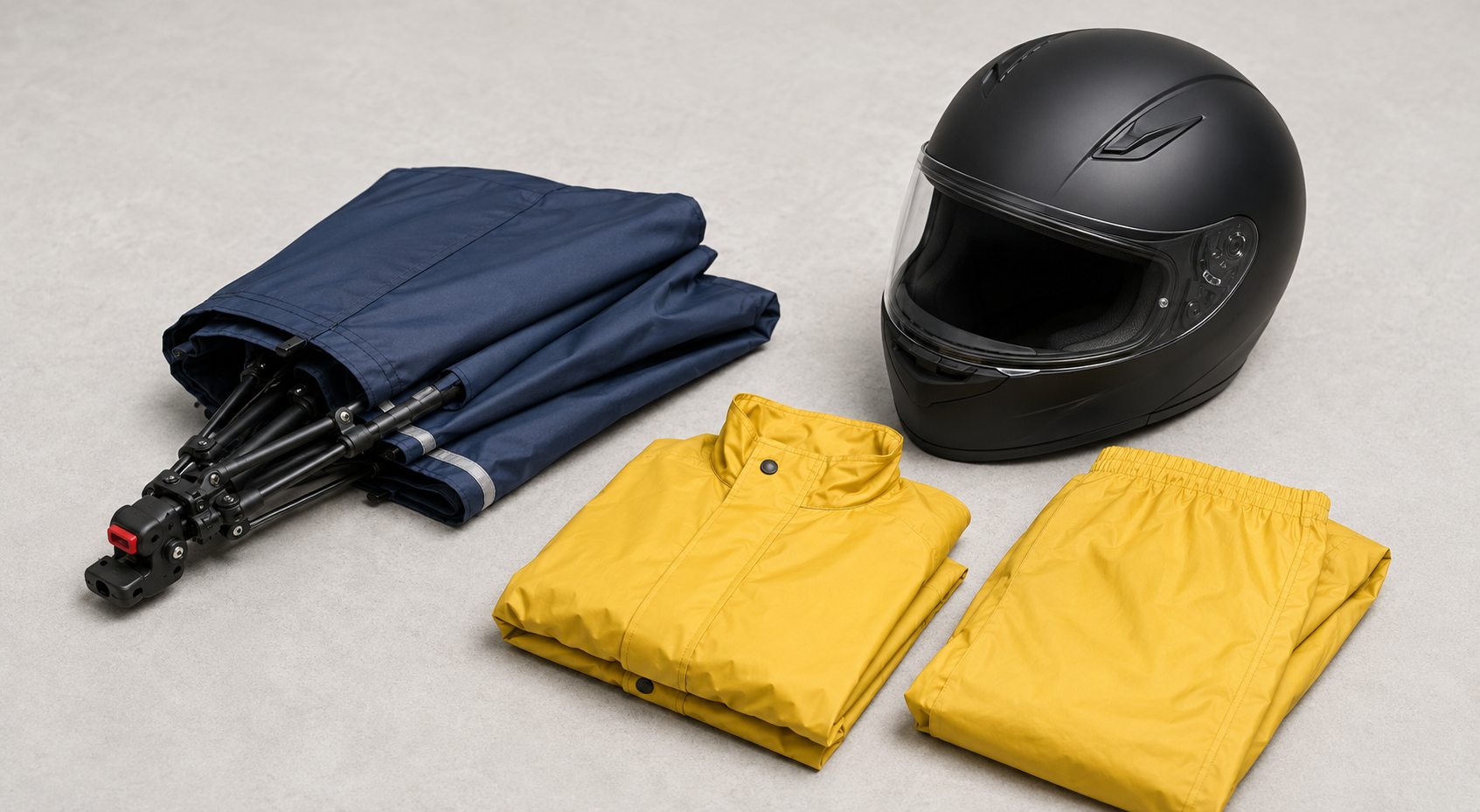
Overhead cover, rainwear and approved protective equipment have different roles. A practical kit uses each item for the conditions it can reasonably handle.
Choosing the Right Product for Your Market
Start with how people ride. A city dominated by short scooter journeys needs a different product mix from a market where customers travel long distances at higher speeds. Climate matters too: frequent sun with brief showers may increase interest in a removable canopy, while long periods of wind-driven rain favor body-worn gear.
VESTA supplies an extended double-layer motorcycle umbrella canopy for motorcycles, scooters and electric bikes, with OEM options for color, logo and packaging. Buyers can also review the broader motorcycle shade category before choosing a specification.
For a quotation, prepare your target quantity, destination market, common vehicle photographs, preferred color and packaging requirements. Then contact VESTA to discuss samples, mounting options and replacement parts before placing a larger order.
Frequently Asked Questions
Can a motorcycle canopy replace a rain suit?
No. A canopy mainly provides overhead coverage, while a rain suit protects the rider's body more closely from side rain and road spray. Many riders may benefit from carrying both.
Is a motorcycle umbrella safe at high speed?
Do not assume that a canopy is suitable for high-speed or strong-wind use. Follow the manufacturer's instructions, verify local rules and stop using it whenever stability, visibility or control may be affected.
Can a canopy cover a rear passenger?
An extended rear section can improve overhead passenger coverage, but results depend on canopy dimensions, seating position and rain direction. Side splash can still enter an open canopy.
What should a wholesale buyer test first?
Begin with fit on common local motorcycles. Check steering clearance, mirror visibility, mounting security, rider headroom, useful coverage, removal time and the availability of replacement hardware.
Can the canopy color and logo be customized?
Many OEM programs offer custom colors, printing and packaging. Confirm minimum quantities, artwork requirements, color tolerances and sample approval with the supplier before production.