
Why Does Umbrella Fabric Color Change in Bulk Orders?
A screen is a reference rather than an approval sample
Many umbrella projects begin with a logo file, a website screenshot or an RGB value. Those files help communicate the direction, but every screen renders color through its own display settings. Brightness, calibration and surrounding light can make the same file appear different on two laptops.
The material adds another layer. Polyester pongee, Oxford fabric and transparent plastic do not reflect light in the same way. A silver or black coating changes the underside and may influence how the face color is perceived.
For that reason, umbrella color matching should move away from the screen as soon as the project becomes serious. Use the digital file to identify the target, then approve a physical sample made on the intended fabric and finish.
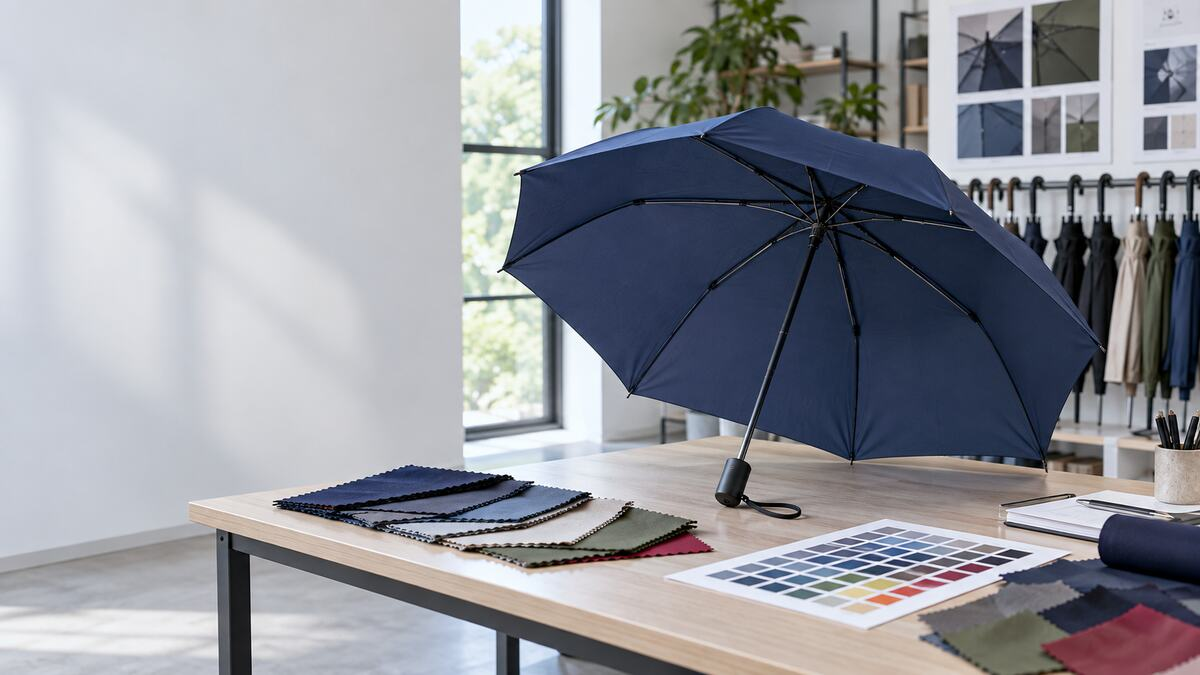
Choose one physical master before sampling begins
Pantone maintains separate systems for graphics and for fashion, home and interior materials. A code from one system should not be assumed to equal a code from another. Tell the supplier which guide and edition the buyer used, or send an original swatch when the brand standard comes from an existing product.
A physical master can be a current Pantone chip, a fabric cutting or an approved product sample.
The master should also name the material it applies to. Matching a dyed canopy to a coated plastic handle is rarely exact because the substrates and production processes differ.
Color approval stages and their limits
|
Approval stage |
What it confirms |
What it cannot confirm |
Buyer check |
|
Digital reference |
Color direction and design communication |
Screen rendering is not a physical approval |
Name the original file and color space |
|
Physical master |
Target color on an identified guide or material |
May not predict another substrate or coating |
Record guide, edition, material and date |
|
Lab dip |
Proposed dye result on a small material sample |
Does not show a finished sewn canopy |
Approve under the agreed light source |
|
Pre-production umbrella |
Color across panels, seams, strap and pouch |
Does not confirm every bulk dye lot |
Open the canopy and retain a signed sample |
|
Bulk lot cutting |
Actual production material before full assembly |
Does not replace finished-product inspection |
Compare rolls and identify dye lots |
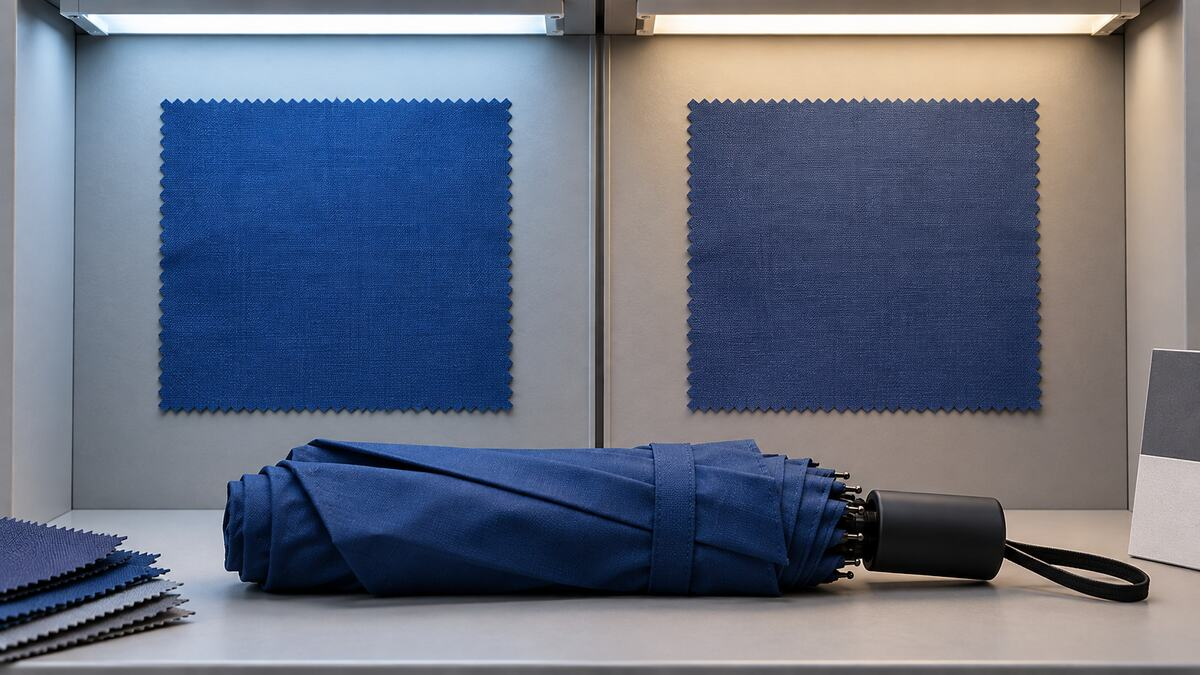
Use one viewing condition for every decision
Color can match under one lamp and separate under another. X-Rite describes this effect as metamerism. It is one reason a sample approved beside an office window may look different under warm retail lighting or cool warehouse LEDs.
Check printing and coating on the actual canopy fabric
A printed logo may shift because the ink sits on a colored base rather than white paper. Screen ink opacity, heat-transfer film, sublimation profiles and curing conditions all influence the result. Approve printed color on the selected canopy fabric instead of approving a paper proof alone.
Coatings also matter. A black backing can improve light blocking but may make a pale face color appear less bright. Silver coatings, water-repellent finishes and calendering can alter gloss or hand feel. Record the coating and fabric construction with the color approval so a reorder does not use the right dye on a visibly different base.
When the design spans several panels, inspect the assembled umbrella from normal viewing distance. Small shade differences can become more noticeable where panels meet. This is especially important for alternating colors, gradients and large areas of solid corporate color.
Separate shade matching from color fastness
An approved shade answers how closely the sample matches the target at that moment. Color fastness asks how the color changes or transfers after exposure. These are separate questions and should have separate acceptance criteria.
For outdoor umbrellas, buyers may consider light exposure as well as water and rubbing, based on the product, market and expected use. ISO 105-B02 covers the effect of artificial light representative of daylight on textile color. ISO 105-E01 addresses resistance to immersion in water, while ISO 105-X12 covers rubbing off and staining other materials.
Control bulk fabric and repeat orders
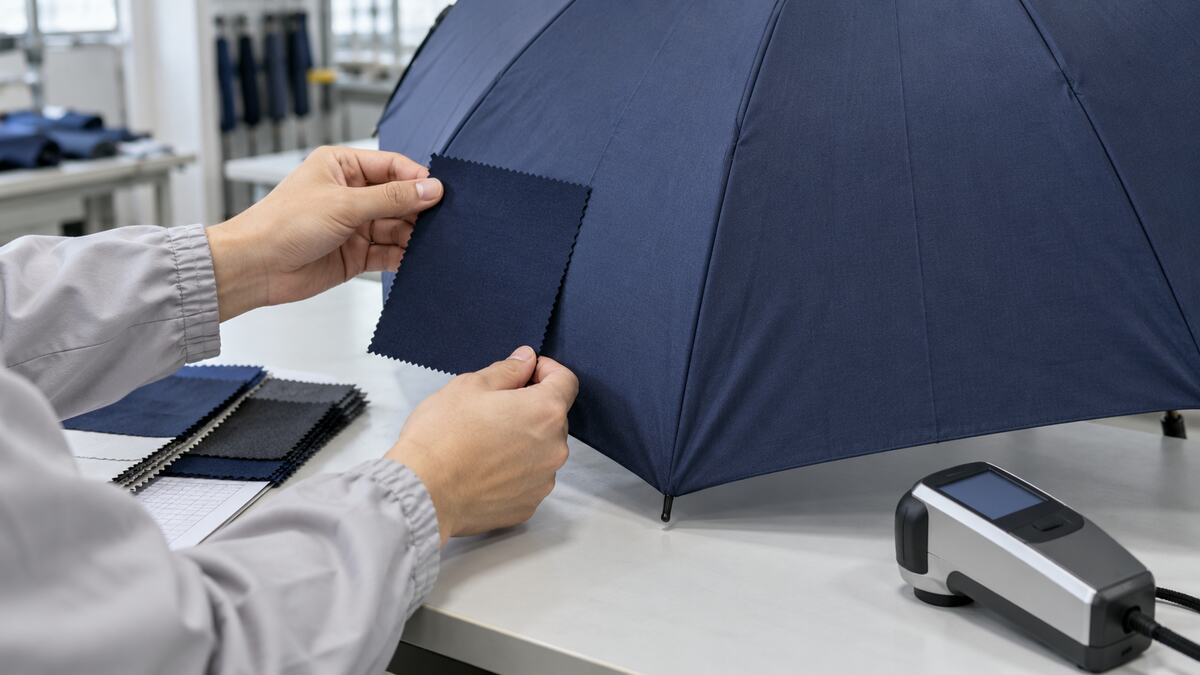
Bulk approval should use a cutting from the actual production lot. Compare it with the retained master before cutting all canopy panels. If the order uses more than one roll or dye lot, define how rolls are identified and whether different lots may be mixed in one umbrella or carton.
Inspect the opened umbrella as well as the roll. Tension, doubled seams and panel orientation change the way light reaches the fabric. Compare several units from different points in the run, then retain a signed production sample for shipment inspection and future reorders.
A repeat order deserves a new check. Dye availability, fabric mill, coating line and stored reference condition may have changed. The previous umbrella is a useful master, but the new lot should be approved before the full quantity is assembled.
Write a color brief that a supplier can use
A practical inquiry identifies the umbrella model, canopy fabric, fabric weight, coating, color system and physical reference. Add the intended print method, viewing light, tolerance method, required fastness tests and who has final approval authority. State whether the pouch, strap, handle and packaging must match or only coordinate with the canopy.
The VESTA umbrella collection includes compact folding and large golf formats that display color differently. A 23-inch automatic folding umbrella has narrow folded panels and a matching pouch, while a custom printed golf umbrella presents a much larger surface.
A clear umbrella color matching process does not promise that every material will look identical. It gives the buyer and supplier a shared way to judge the result. That makes sample comments easier to act on and gives bulk inspection a reference more reliable than a screen image or an email saying the shade feels wrong.
Frequently asked questions
Can a supplier match an umbrella from an RGB or HEX value
The value can show the intended direction, but a screen is not a dependable production master. Convert the request into an identified physical color reference and approve it on the selected canopy fabric.
Why does the approved fabric look different on an open umbrella
Canopy curvature, panel direction, seam layers, tension and surrounding light can change the visual result. Review a complete pre-production umbrella after approving the small fabric sample.
What Delta E should a custom umbrella use
There is no universal value for every product or color. Agree on the calculation method, measurement conditions and acceptable limit for the end use, then keep visual inspection in the approval process.
Does a color match prove that the fabric will not fade
No. Initial shade matching and color fastness are different. Light, water and rubbing resistance need separate test methods and acceptance criteria appropriate to the umbrella and market.